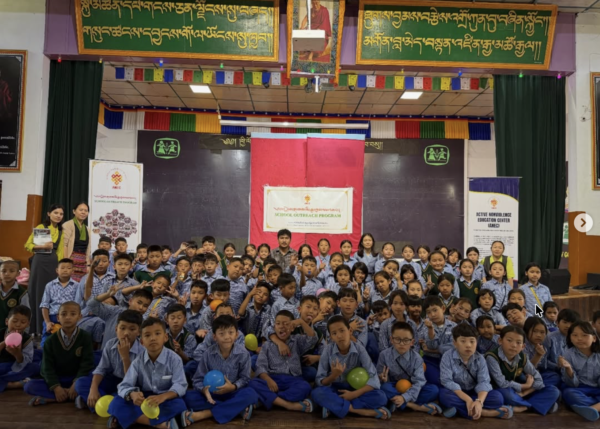

School Outreach Program:
Dekyi’s Storybook Program for primary students
Project/Program Name: School Outreach Program (SOP)
Date of Activity: 25th May – 30th June 2026, Tuesday
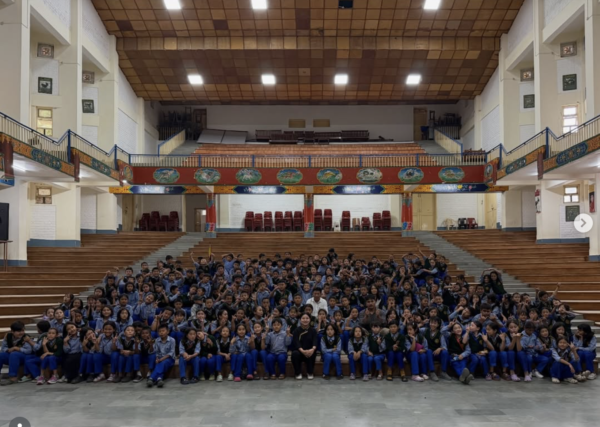
Venue: 10 Tibetan Schools
Reported by: Tsering Sonam (Project Officer)
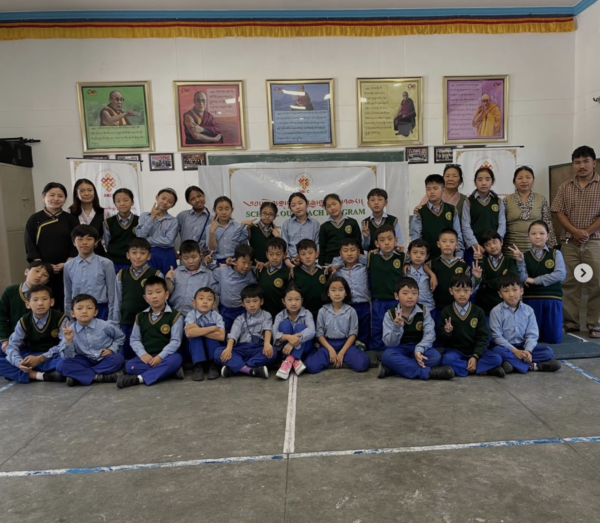
Total Participant/Beneficiaries: 735 students
Objective of the Program:
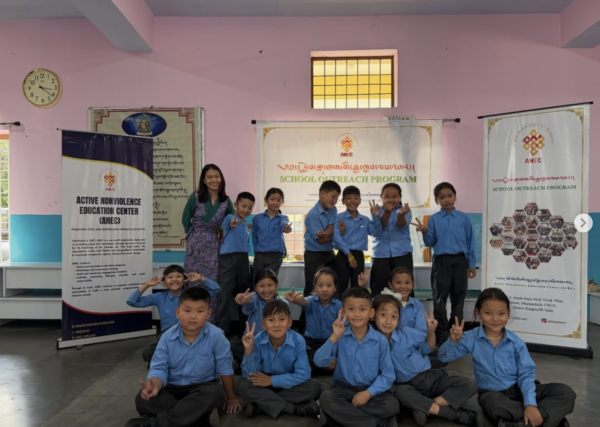
Since China’s occupation of Tibet in 1959, policies targeting Tibetan language, culture, religion, and identity have intensified, particularly through the expansion of colonial-style boarding schools for Tibetan children. In response, Active Nonviolence Education Center (ANEC) has launched the School Outreach Program (SOP) to raise awareness among young Tibetan students about the current situation inside Tibet while promoting the principles of nonviolence. Using ANEC’s children’s book Dekyi as its primary educational resource, the program engages students through storytelling, songs, discussions, and interactive activities. The workshops aim to foster compassion, cultural pride, and peaceful resilience while inspiring students to recognize their shared responsibility in preserving Tibetan language, culture, and religion for future generations.
Resource Persons : Tsering Sonam (Project Officer)
: Ngawang Paldon (Project Officer)
:Mindu Tsomo (Intern)
Activity Overview:
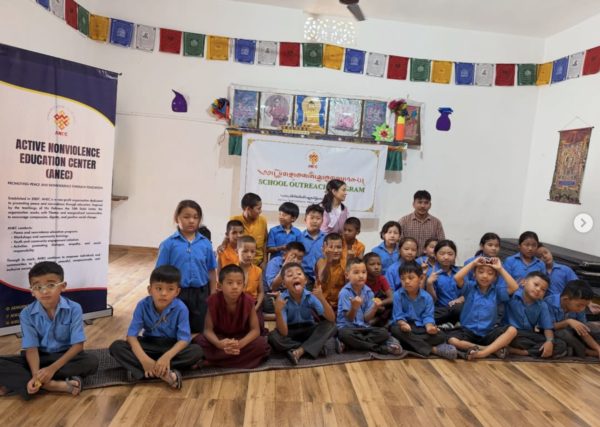
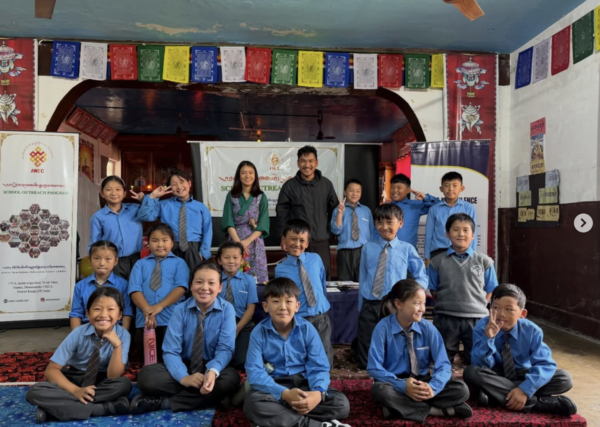
- An introduction of the organization given by the Project Officer.
- Introduction round of facilitators and students to feel more connected and relaxed.
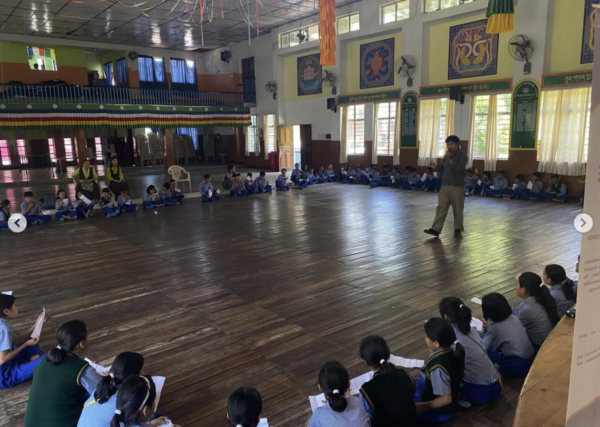
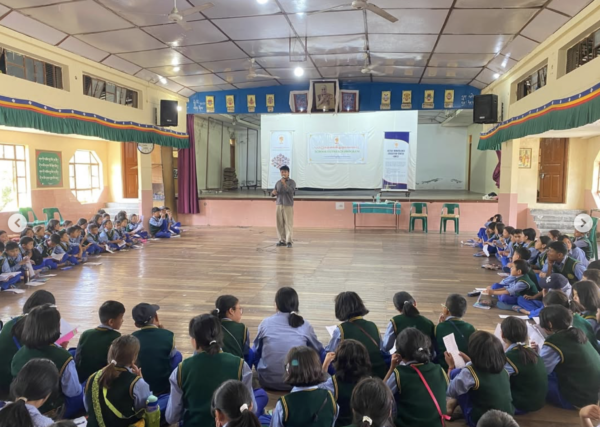
- The Session followed with students divided into two separate groups led by facilitators.
- Resource persons will lead each group through an engaging storytelling session based on Dekyi, followed by learning the song “Amea Olo,”featured in the storybook. The session highlights the importance of preserving the Tibetan language, culture, and identity while reinforcing the program’s core messages.
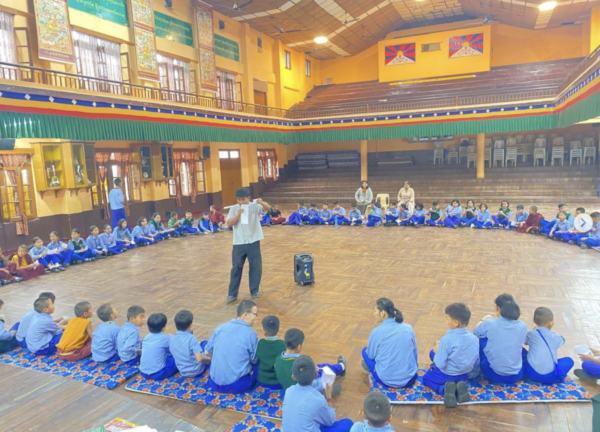
- Participants will regroup into a larger session, where selected volunteers will retell the story to the entire group, reinforcing their understanding of the key messages and ensuring the children have fully understood the story.
- An interactive energizer game involving physical actions will be conducted to keep participants engaged, attentive, and focused throughout the workshop.
- All participants will sing the newly learned song together several times as a group, reinforcing its message while encouraging active participation and collective learning.
- The workshop concludes with an interactive balloon game, where each participant is given a balloon and a toothpick. Within a limited time, the facilitator instructs the children to “win the game” without ever telling them to burst anyone else’s balloon. Despite this, most participants instinctively try to pop others’ balloons, leaving only a few winners. During the debrief, the resource person highlights the key lesson: they were never instructed to harm others in order to succeed. The activity reinforces the principle that one does not need to hurt others to achieve success everyone had an equal opportunity to win by protecting their own balloon while respecting others.
Methodology:
- Participant-Centred Learning:Children actively participate in every session through storytelling, discussions, games, songs, and presentations rather than passive listening.
- Experiential Learning:Interactive games and activities allow participants to experience and reflect on the principles of nonviolence, cooperation, and empathy.
- Story-Based Education:ANEC’s children’s book Dekyi serves as the primary educational tool to introduce complex issues in an age-appropriate and engaging manner.
- Interactive Group Facilitation:Students work in small groups led by resource person, encouraging participation, collaboration, and open communication.
- Peer Learning:Volunteers retell the story and share their understanding, reinforcing learning through peer-to-peer engagement.
- Arts-Based Learning:Songs and creative activities are incorporated to improve retention, encourage cultural pride, and make learning enjoyable.
- Reflection and Debriefing:Every major activity concludes with guided reflection, helping students connect the experience with real-life values of nonviolence, compassion, and responsibility.
- Values-Based Education:The workshop promotes nonviolence, empathy, cultural preservation, responsibility, and peaceful conflict resolution throughout all sessions.
Lesson learned or Challenges Encountered:
- It was challenging to handle a large number of students to participate in the workshop.
- Due to the unpredictable number of student participants, some planned activities may need to be adjusted, as activities designed for smaller groups may not be suitable for larger groups.
Number of students at different schools:
1. Mewon Tsuglag Petoen School – 90 students
2. TCV Day School Mcleod – 35 students
3. TCV Chauntra– 80 students
4. TCV Gopalpur – 79 students
5. TCV Suja – 115 students
6. STS Puruwala and Poanta – 25 students
7. STS Chauntra– 16 students
8. STS Bir – 15 students
9. TCV Upper– 280 students
Total number of students: 735 students